
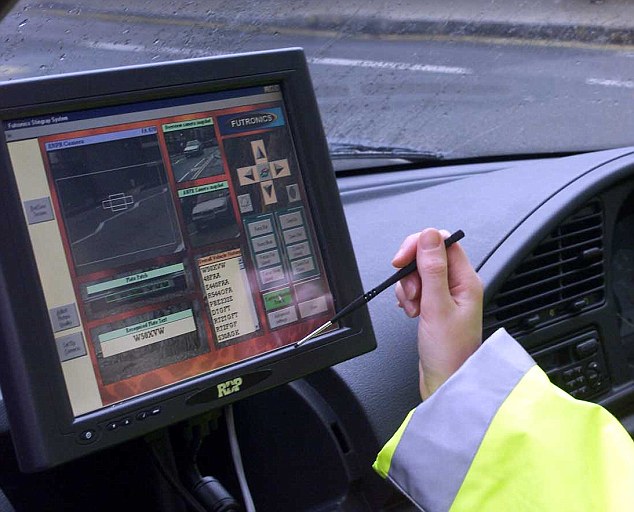
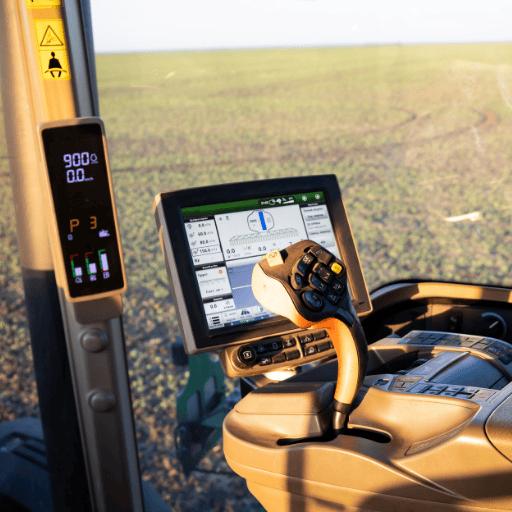
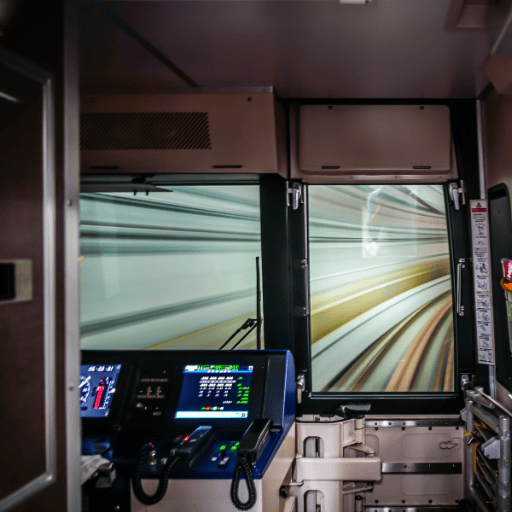
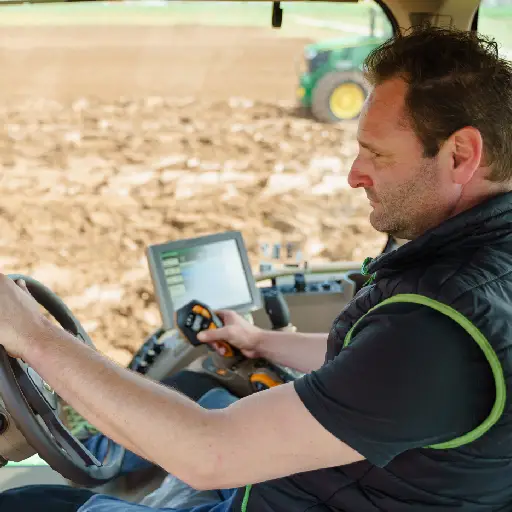
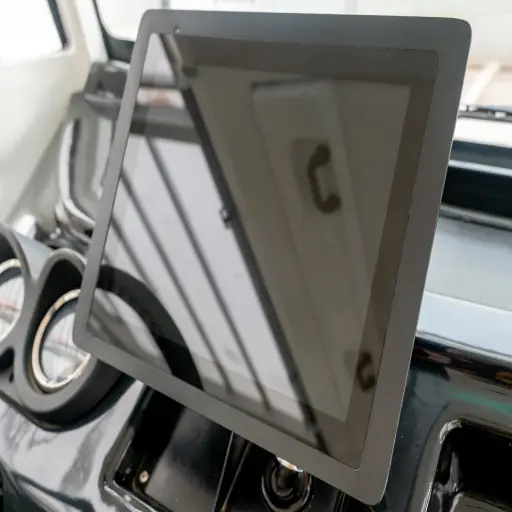

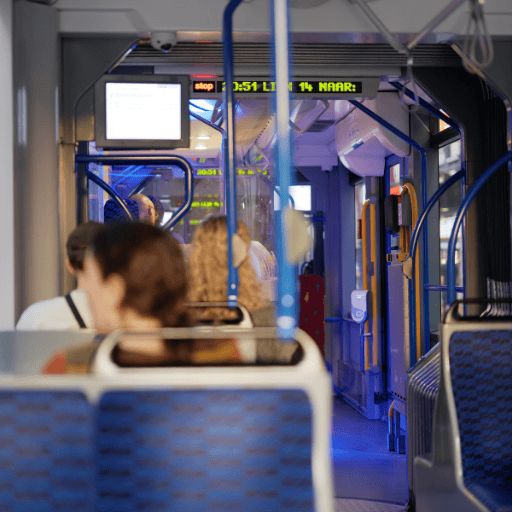
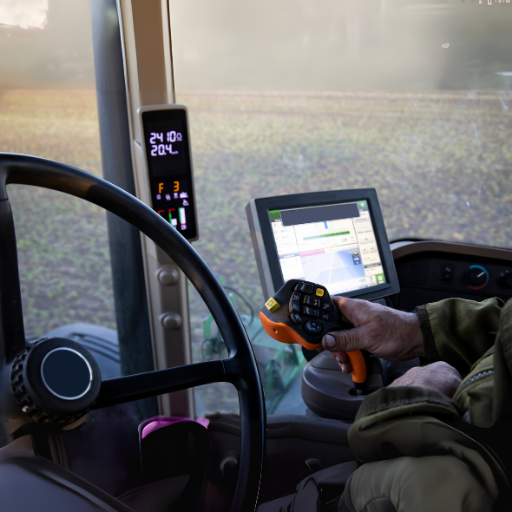
A vehicle display that’s unreadable in direct sunlight is worse than useless — it’s a distraction and a safety hazard, forcing the driver or operator to lean in, shade the screen, or simply guess at information they can’t clearly see. Montek vehicle displays deliver up to 2,500+ nits of sustained high brightness combined with precision optical bonding and multi-layer AR/AG coatings that maintain clear, accurate readability in direct sun, on dashboard-mounted positions that receive reflected glare, and in the wide range of lighting transitions that occur throughout a normal shift. Navigation data, telematics readouts, and operational controls are always clearly visible — at a glance, without distraction.
Vehicle displays take continuous punishment that standard industrial displays aren’t designed to survive. Rough unpaved roads, construction site ground conditions, railroad crossings, mine haul road ruts — all transmit intense shock and vibration directly to dashboard-mounted and cab-mounted electronics. Montek vehicle displays are built to MIL-STD-810G standards for shock and vibration resistance, with IK10-rated reinforced glass and ruggedized dash-mount and panel-mount systems that maintain mechanical integrity and image clarity even after thousands of hours of operation in high-vibration vehicle environments. Built for mining trucks, construction equipment, emergency response vehicles, and heavy transport — not just passenger cars.
Vehicle electrical systems are not all created equal — standard passenger vehicles operate at 12V, heavy commercial trucks at 24V, military and specialty vehicles at varying voltages, and hybrid and electric platforms introduce additional complexity. Montek vehicle displays accept a wide DC input voltage range of 9V to 36V, making them compatible with virtually any vehicle power architecture without modification. Low-power LED backlighting minimizes current draw on vehicle electrical systems — a particularly important consideration for electric and hybrid vehicle platforms where every watt of auxiliary power consumption affects range.
Vehicle displays need to respond accurately to operators who are managing the vehicle, monitoring systems, and interacting with the display simultaneously — often under vibration, sometimes wearing gloves, and always under time pressure. Montek supports projected capacitive (PCAP) multi-touch technology for intuitive interaction with GPS navigation, fleet management applications, and vehicle diagnostic systems — supporting input from bare hands, standard work gloves, and styluses without removing safety equipment. Palm rejection and multi-point touch tracking ensure accurate input even on rough terrain. Resistive touch provides reliable single-point input for specialized industrial vehicle applications where PCAP isn’t appropriate.
Commercial and industrial vehicles operate in every climate and every season. Montek vehicle displays are rated for -30°C to +80°C operation — performing reliably on a frigid winter construction site start-up and equally reliably on a desert mining operation in midsummer heat. IP65 to IP68 sealed enclosures protect against rain, road spray, mud, dust, and the high-pressure wash-down that commercial vehicle maintenance requires. Your display survives what the vehicle survives.
Vehicle displays transition constantly between radically different lighting environments — bright open highway, shaded warehouse interiors, underground parking structures, night driving conditions. Montek’s integrated ambient light sensors automatically adjust display brightness to match current lighting conditions in real time, keeping the screen at the optimal brightness level for visibility without blinding glare or insufficient contrast. Operators stay focused on their job. Backlight lifespan is extended. Energy consumption is optimized across the shift.
Equipping a vehicle fleet, developing an in-vehicle platform, or integrating displays into specialized vehicles? Contact Montek — we’ll spec exactly the right display for your vehicle type and application requirements.
